

Weekly nature excursions give Oslo children hands-on lessons in water, risk and green skills
In June 2026, a project member from the University of Oslo joined a local kindergarten in Oslo on two of its weekly excursions to nearby streams, observing how outdoor play by the water is used as a rich learning arena for young children.
The kindergarten has a long-standing routine of going on nature trips once a week. The staff say they often choose destinations with water because these places offer particularly strong educational value and, just as importantly, joy.
“There’s just something about water that brings enjoyment,” one teacher explained, noting that the children are consistently engaged and curious when they come to the stream.
Learning by the water’s edge
During the excursion, the teachers actively used the surroundings as a starting point for conversation and learning. They asked the children what water can be used for. The answers came quickly: putting out fires, drinking, and other everyday uses.
The teacher then moved on to talk about the ecosystem in a way that clearly resonated with the children. They discussed how both trees and water help provide oxygen, and how these elements in nature are connected.
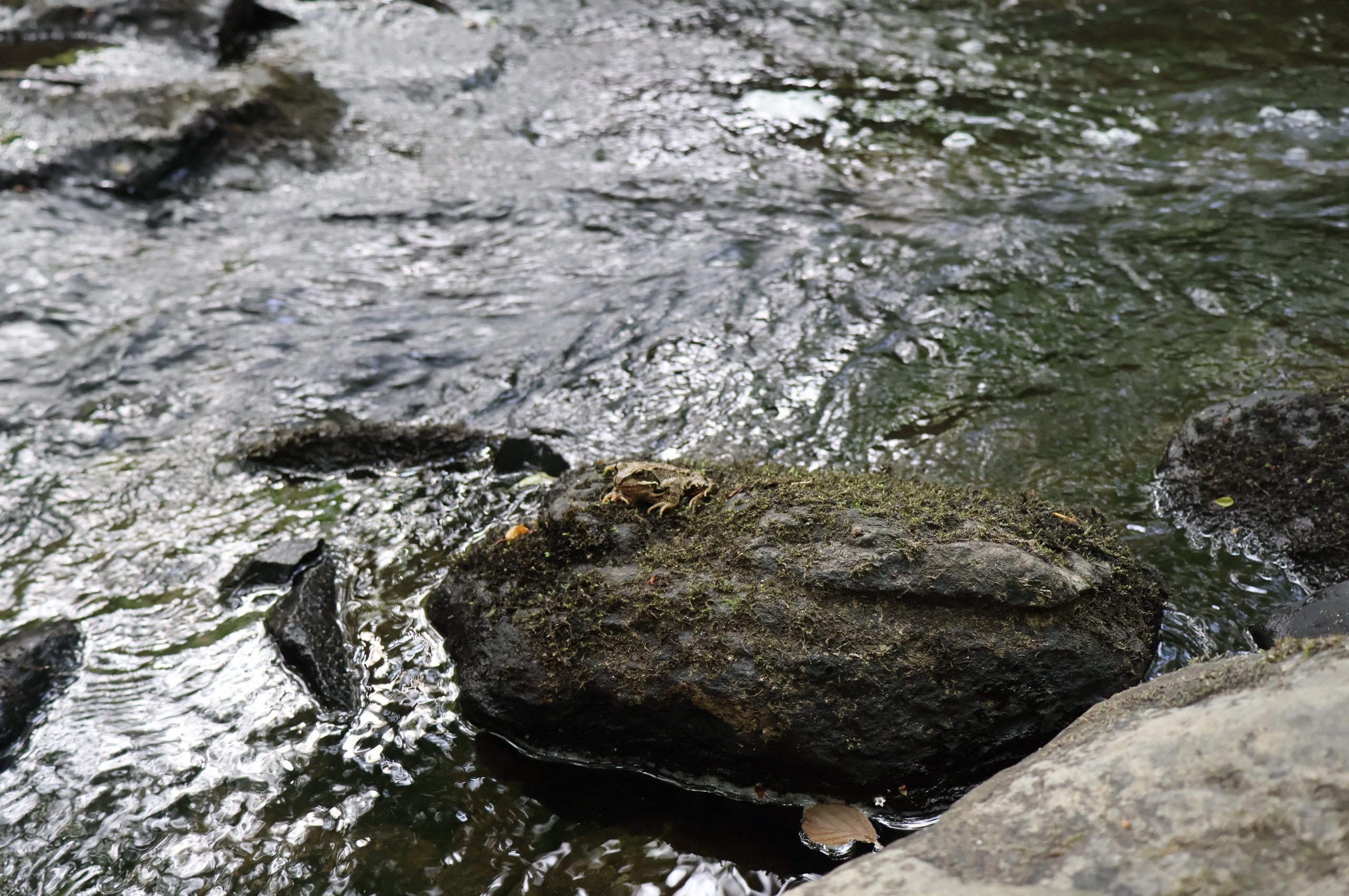
The group also explored life in the stream. Lying on their stomachs along the riparian zone, the children peered into the water. From this vantage point they spotted frogs, aquatic plants, and even managed to identify a salamander. Each discovery became a small lesson in biodiversity and ecosystems.
Green skills and understanding risk
The teacher emphasised that nature, and particularly areas close to water, offers unique opportunities to teach “green skills”, practical environmental knowledge, awareness of ecosystems, and understanding of how humans interact with nature.
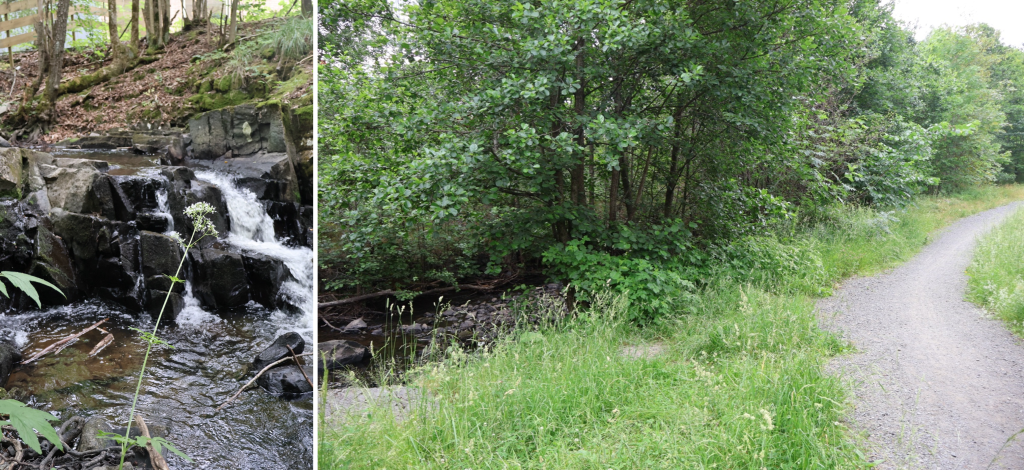
The trip also became a way to talk about risk and practical skills. Slippery stones, uneven terrain and the water’s edge were used as opportunities to discuss how to move safely in nature and how to recognise potentially dangerous situations.
“On trips like this, children can learn these skills as well,” the teacher said, explaining that nature outings are both a learning arena and a training ground for assessing and handling risk.
Constant risk assessment – but not overprotection
In a conversation with one of the staff members, the PhD student learned that kindergarten teachers think extensively about risk when they visit such places with children.
“A child can drown even in 2 centimeters of water,” the employee said, adding that being responsible for other people’s children makes her particularly alert to possible dangers. She described how she quickly assesses risks such as slippery stones or logs in the water where children might fall.
At the same time, she stressed the importance of not overprotecting the children. There is much that children can learn and experience from small mishaps, she reflected. Minor falls, wet clothes or slipping on stones can become valuable lessons rather than problems to be completely avoided.
She noted that she could already see that a small boy in boots wading into the stream would end up with water inside them, but in the warm weather, “it doesn’t matter,” she concluded.
Balancing safety and experience
The observations from the June excursion highlight a careful balance: kindergarten staff are constantly assessing risks while deliberately allowing space for exploration, minor mishaps and the kind of direct experience that helps children develop resilience, environmental awareness and practical judgment.
For the University of Oslo project member, the trip offered a close look at how everyday practices in kindergartens can foster green skills and risk competence from an early age, simply by letting children lie on their stomachs at the water’s edge and look, listen and learn.
Author(s): Silje Havrevold Henni and May Linn Bokma Mørch, University of Oslo