
OneAquaHealth workshop in Ghent highlights opportunities and challenges for integrating One Health research results into water management
Ghent, Belgium – 29 September 2026
On 29 September 2026, a stakeholder workshop was held in Ghent, Belgium, bringing together participants involved in environmental monitoring, water management, policymaking, and research. The workshop provided an opportunity to present and discuss the findings and tools developed within the OneAquaHealth project, assess their practical relevance, and explore opportunities for their integration into existing environmental monitoring and management practices.
The interactive workshop encouraged participants to share their experiences, identify current challenges, and provide feedback on how the project’s outcomes could better support environmental management and decision-making.
Bridging the Gap Between Scientific Research and Decision-Making
One of the central themes of the workshop was the challenge of translating scientific information into practical management decisions. Participants highlighted that although substantial environmental monitoring data and insights are already available, these are not always effectively translated into actionable information for policymakers and environmental managers.
Limited financial and human resources, differences in monitoring approaches and overlapping institutional responsibilities with different objectives were identified as important challenges. Participants emphasised the need for clear, accessible and reliable information that can support timely and informed decisions.
Exploring the Practical Applications of OneAquaHealth Findings and Tools
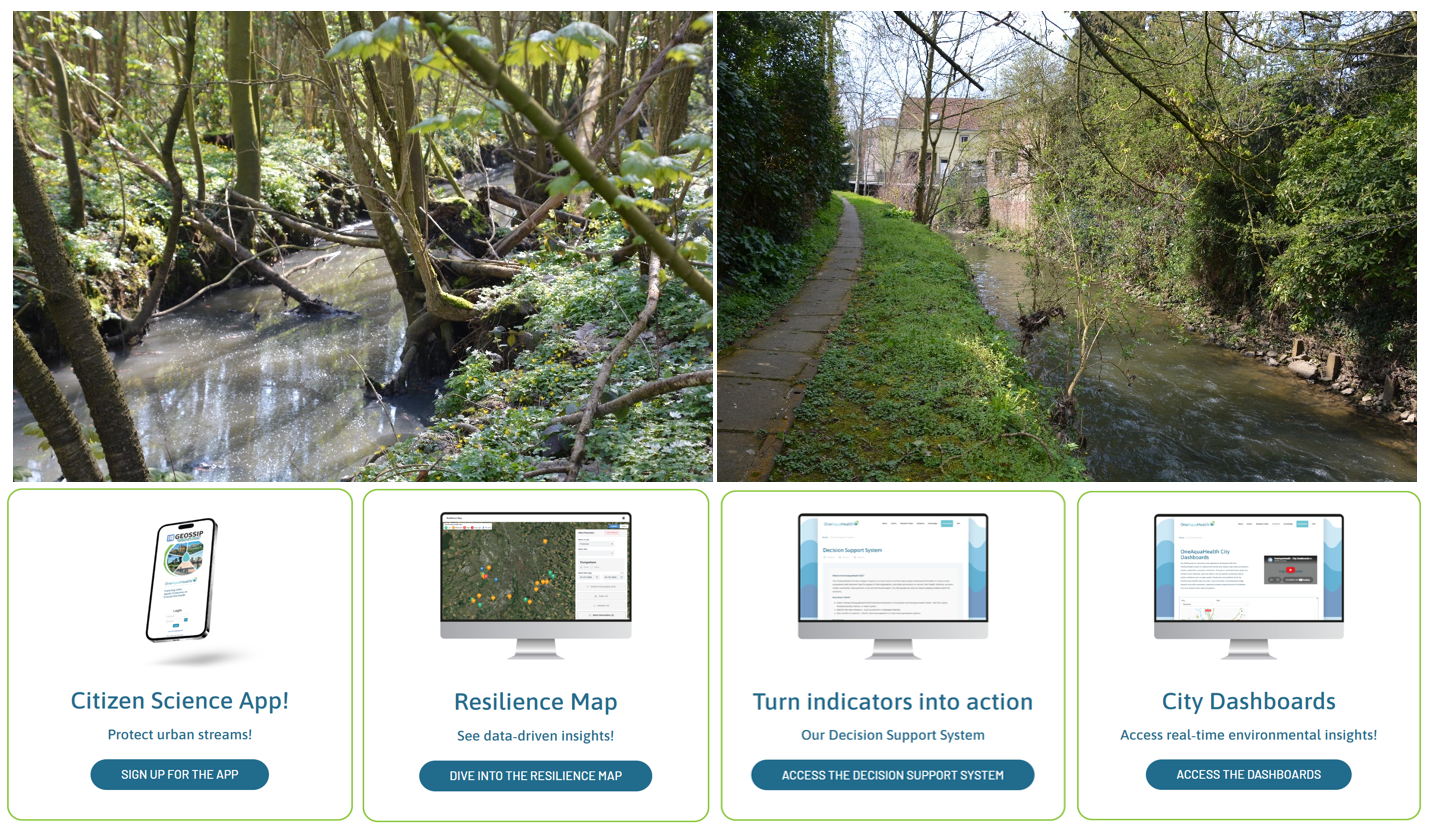
The workshop featured presentations and discussions on the project’s indicator framework, Citizen Science App, City Dashboard, Resilience Map and Decision Support System (DSS).
The indicator framework stimulated discussions on the relevance of ecological and health-related indicators for assessing urban freshwater ecosystems. Participants emphasised the importance of considering overall ecosystem composition rather than interpreting individual indicators in isolation. They also highlighted the need to simplify complex scientific information and ensure that findings related to potential health risks are communicated accurately and responsibly.
The Citizen Science App received positive feedback, particularly for its potential to complement existing citizen science initiatives by collecting information on the physical and hydromorphological characteristics of freshwater ecosystems. Participants also discussed opportunities to use photographs and artificial intelligence to monitor environmental changes over time. However, they stressed the importance of standardising citizen-generated data and connecting the application with existing monitoring platforms.
Discussions on the City Dashboard and Resilience Map focused on data comparability, methodological transparency, and integration with existing information systems. Participants highlighted the importance of clearly documenting data sources, assessment methods, and uncertainties to ensure that results are interpreted correctly.
The Decision Support System also generated discussions about its practical application. While the system offers a broad range of potential management and restoration measures, participants emphasised the need to simplify the selection of measures and ensure their relevance to existing environmental policies and assessment frameworks, including the European Water Framework Directive.
Addressing Barriers and Identifying Opportunities for Future Adoption
A recurring message throughout the workshop was that the successful adoption of new environmental monitoring and decision-support tools depends on their compatibility with existing institutional practices and systems.
Participants identified limited resources, differences in data formats and methodologies, and the increasing number of available tools as potential barriers to adoption. Rather than introducing additional standalone systems, they encouraged greater coordination with existing platforms and the harmonisation of monitoring data and assessment approaches.
The importance of involving potential end users early in the development process was also highlighted. Such engagement would help ensure that tools respond to practical needs, complement existing initiatives, and remain feasible for long-term use.
Moving Towards More Integrated and Action-Oriented Environmental Management
The workshop concluded with a shared recognition that scientific innovation must be accompanied by practical considerations to support its effective use in environmental management.
Key priorities emerging from the discussions included simplifying scientific outputs, improving communication between researchers and decision-makers, harmonising monitoring approaches, clarifying responsibilities, and strengthening collaboration among stakeholders.
The feedback collected during the workshop will provide valuable input for refining the OneAquaHealth outcomes and exploring their potential future application.
Ultimately, the workshop reinforced an important message: the value of environmental monitoring and decision-support tools lies not only in the information they provide, but also in how effectively that information can be translated into meaningful actions to improve the health and resilience of freshwater ecosystems.
Author(s): Marie Anne Eurie Forio, Long Ho, Peter Goethals, Ghent University
Keywords: #OneAquaHealth #EnvironmentalMonitoring #DecisionSupportSystems #CitizenScience #FreshwaterEcosystems