

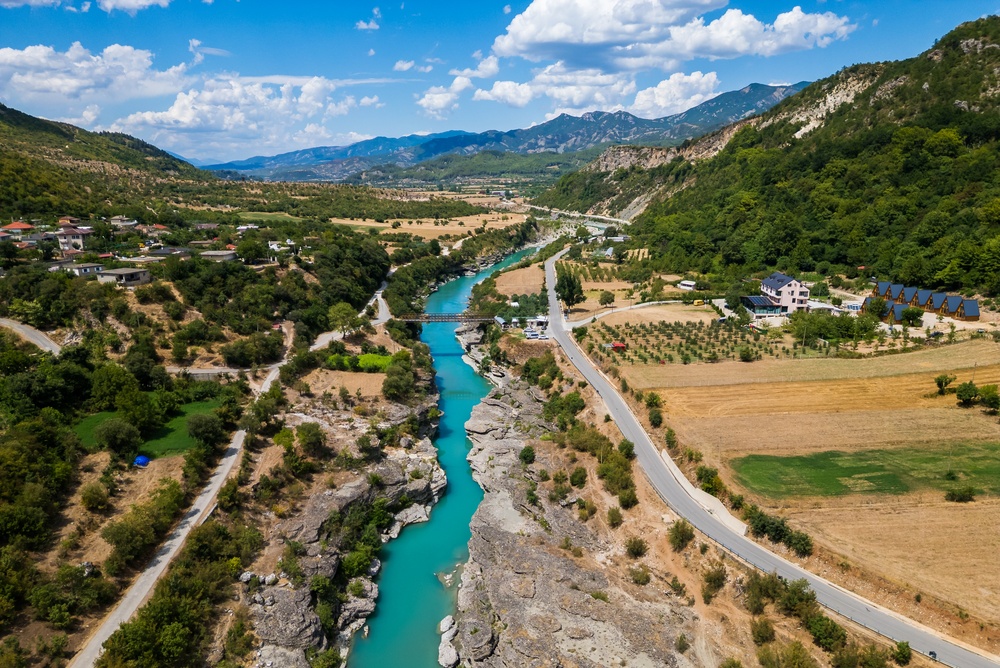
How close is the end of our rivers?
When viewed through the lens of ecology and climate science, the “end” of our global river systems is no longer a distant, abstract threat. The world’s rivers are actively in a state of severe, unprecedented depletion.
According to data released by the United Nations World Meteorological Organization (WMO), 2025 marked one of the driest years for global river flows in more than three decades. We are no longer experiencing isolated “bad years”; rather, we have entered a permanent era of global water bankruptcy driven by the dual forces of human over-extraction and climate whiplash.
Scientists often refer to glaciers, groundwater, and major river basins as Earth’s freshwater savings account. Historically, these resources absorbed the shock of a single bad drought. Today, that bank account is being overdrawn:
- Below-Normal Flow: In recent assessments, over 36% of the world’s river basin areas reported significantly below-normal discharge. Only about one-third of global rivers maintain what used to be considered “normal” flows.
- Drying Basins: Iconic, life-sustaining river systems like the Amazon, Nile, Rhine, and Tigris-Euphrates are routinely hitting record-low levels. In highly populated basins, rivers are increasingly drying up completely before ever reaching the ocean.
- Glacial Extinction: The mountain glaciers that feed major rivers lost a staggering 1,400 gigatonnes of water in a recent three-year window, drastically reducing the baseline water supply available downstream.
Climate change doesn’t just mean rivers dry up; it means the water cycle has become erratic. Rivers are increasingly swinging violently between two hostile extremes:
- The Deluge: Sudden, extreme rainfall and rapid glacial melting trigger catastrophic flash flooding and sediment erosion.
- The Drought: Weeks later, intense heatwaves speed up evaporation, transforming those same raging rivers into cracked, barren landscapes.
This is commonly known as the Weather Whiplash phenomenon.
On the other hand, direct human behavior is the primary trigger pulling the lever on the water crisis, through, for example:
- Agricultural Colonization: Roughly 70% of global freshwater withdrawals go toward agriculture. Massive irrigation projects systematically bleed rivers dry.
- The Sinking Delta Effect: Because we dam rivers to generate power and trap water, sediment never reaches the coast. Major deltas, like the Mekong Delta, which feeds 18 million people, are actively sinking and being swallowed by rising, salty oceans.
- Chemical Dead Zones: What little water remains is often heavily polluted with agricultural runoff, industrial waste, and forever chemicals (PFAS), choking out oxygen and creating aquatic dead zones.
So, the question naturally arises: How close are we to the Edge?
We are already living in the fallout. In parts of Europe and North America, record-low river levels have disrupted international shipping lanes and forced nuclear power plants to shut down because there wasn’t enough river water left to cool their reactors.
If current water management and greenhouse gas emissions patterns continue, many peer-reviewed projections warn that up to 62% of the global population will face severe water scarcity by 2100. The “end” isn’t a sudden day when water completely vanishes; it is a slow, compounding squeeze where clean, reliable surface water becomes a luxury resource.
To pull global river systems back from the edge of ecological collapse, water management is shifting away from a traditional command-and-control model toward Integrated Water Resources Management (IWRM), a holistic framework that treats an entire river basin as a single, interconnected system.
Instead of cities, factories, and farms competing for water in isolation, IWRM coordinates management across all sectors to balance human needs with ecosystem health. It acts as a soft path to water security by maximizing efficiency rather than endlessly trying to find new supply.
- Cross-Sector Governance: Decisions are made by unified river basin authorities rather than fragmented local governments. This prevents upstream users from draining water needed by downstream communities and ecosystems.
- Conjunctive Water Use: Managing surface water and groundwater as a single pool. When rivers are high, excess water is diverted to replenish aquifers through Managed Aquifer Recharge (MAR). During droughts, communities draw sustainably from these underground reserves.
- Environmental Flows: IWRM legally mandates that a minimum flow of water must always remain in the river. This protects river ecosystems, sustains fish migrations, and prevents saltwater intrusion.
Nature-Based Solutions are also being deployed because one of the best ways to save a river is to let it behave like a river again:
- Floodplain Restoration (“Room for the River”): Instead of confining rivers with concrete infrastructure, countries like the Netherlands are restoring natural floodplains. This reduces urban flood risk, improves water filtration, and supports groundwater recharge.
- Dam Removal and Connectivity: Thousands of obsolete dams are being removed across North America and Europe to restore natural water flow and sediment transport to vulnerable deltas.
- Biological Engineers: Reintroducing native keystone species, such as beavers, can slow river flows, capture pollutants, create wetlands, and increase drought resilience.
Saving global river systems requires choosing ecological resilience over over-extraction through Integrated Water Resources Management (IWRM) and nature-based solutions. Implementing these proven tools is essential to secure both river health and human survival.
Keywords: Global River Systems # Water Scarcity # Climate Change # Integrated Water Resources Management (IWRM) # Nature-Based Solutions
Author(s): Oscar Tamburis, CNR / National Research Council of Italy