30 March 2026 – Zwalm River Basin, Belgium
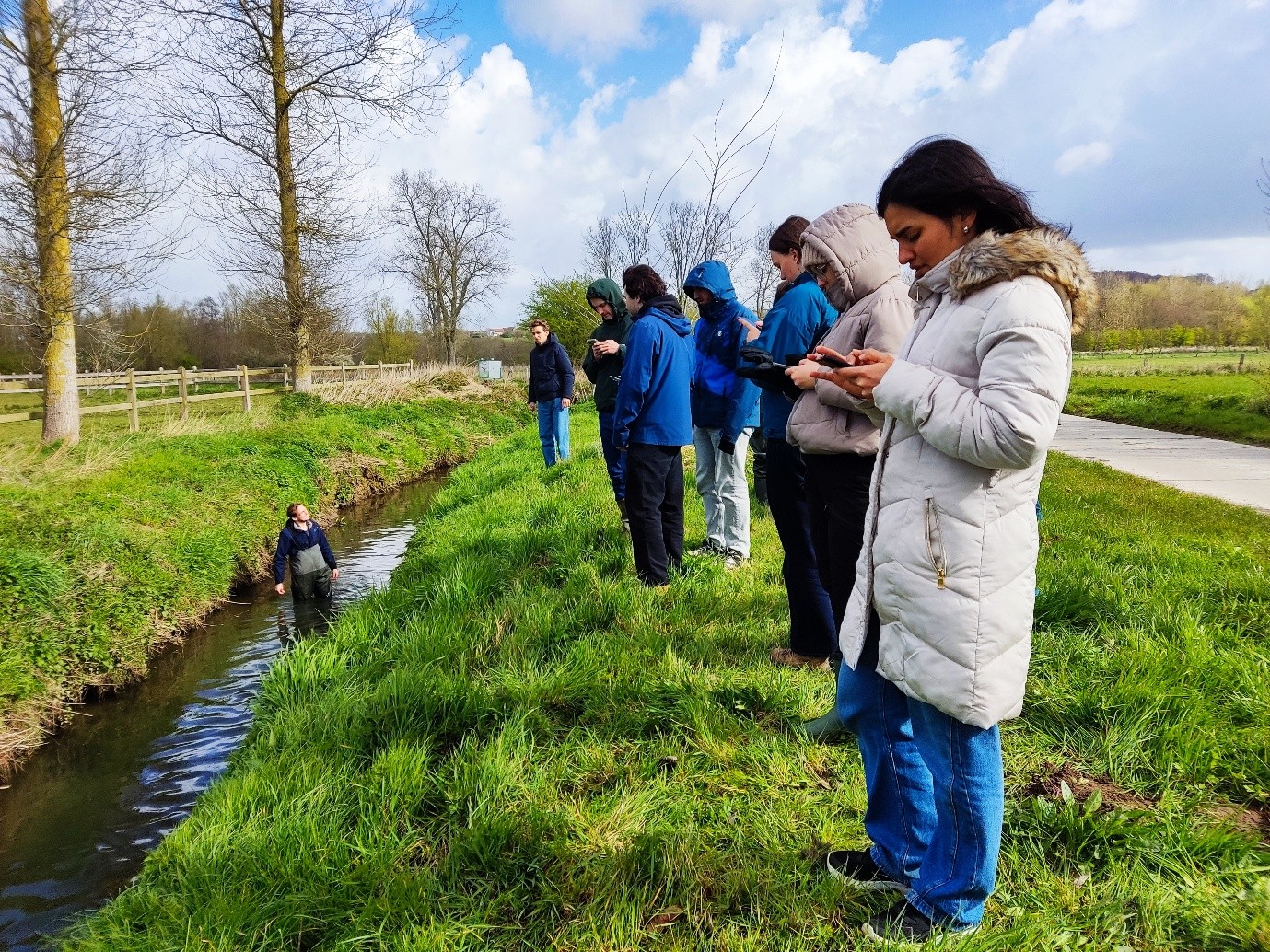
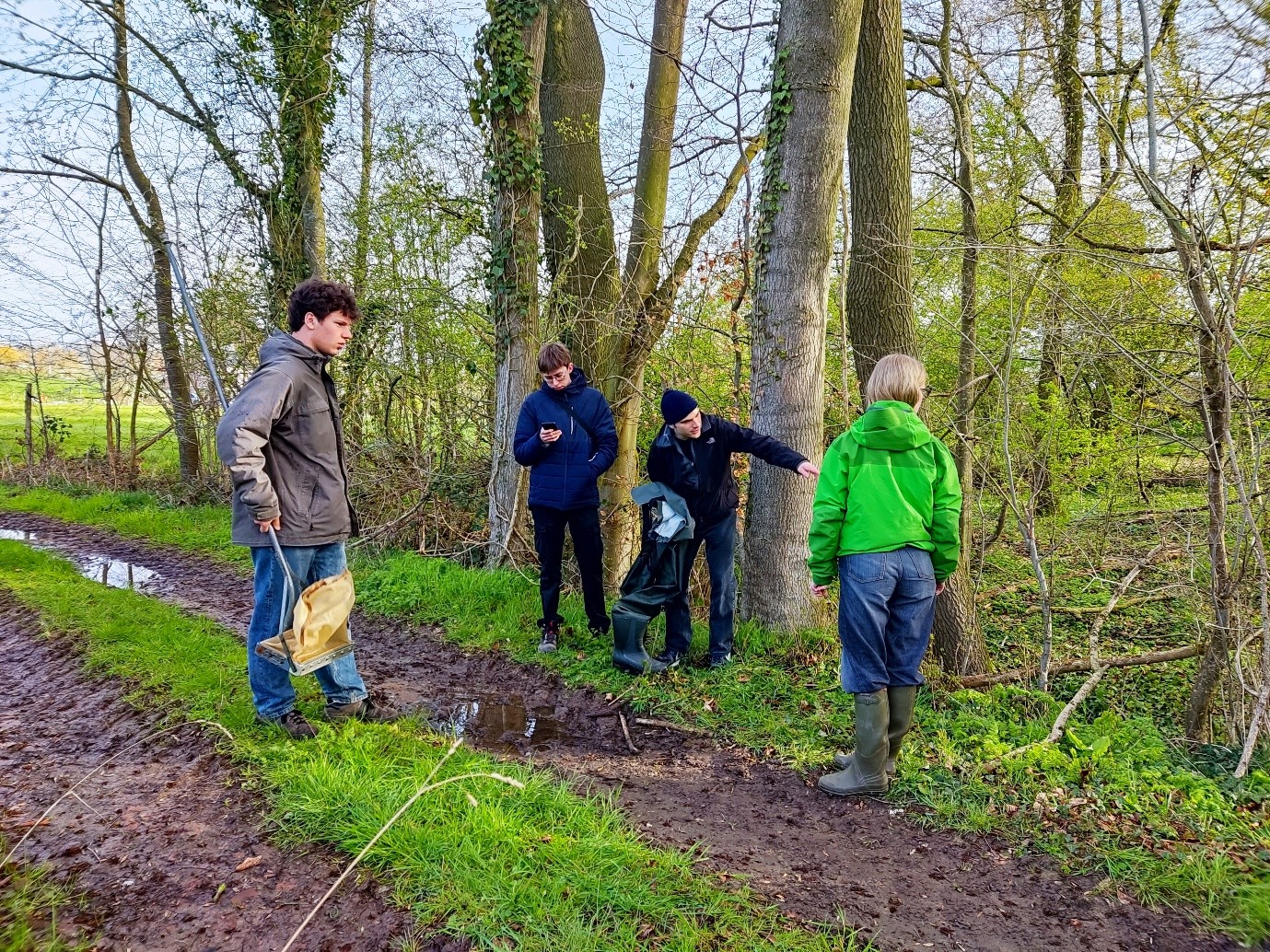
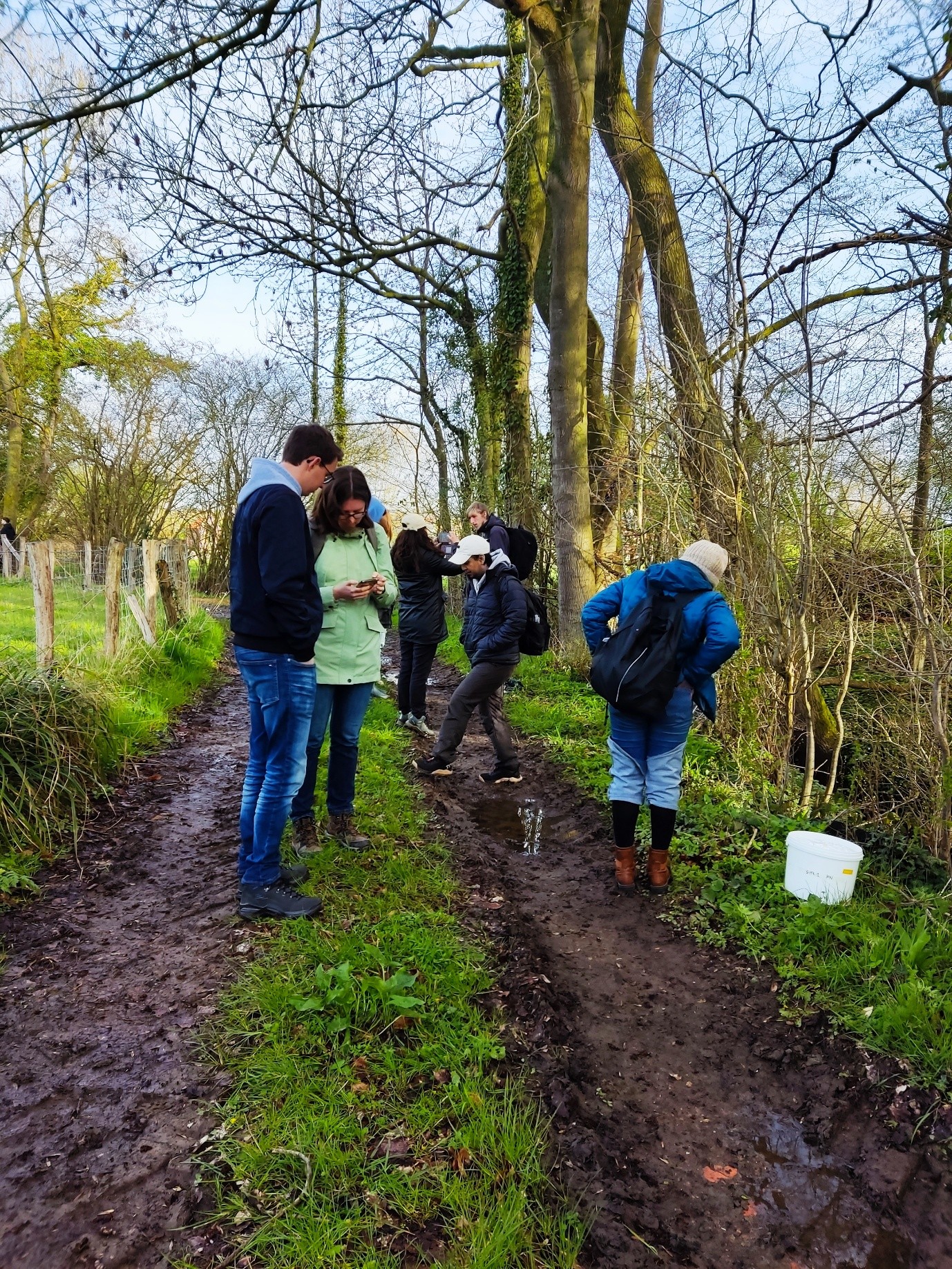
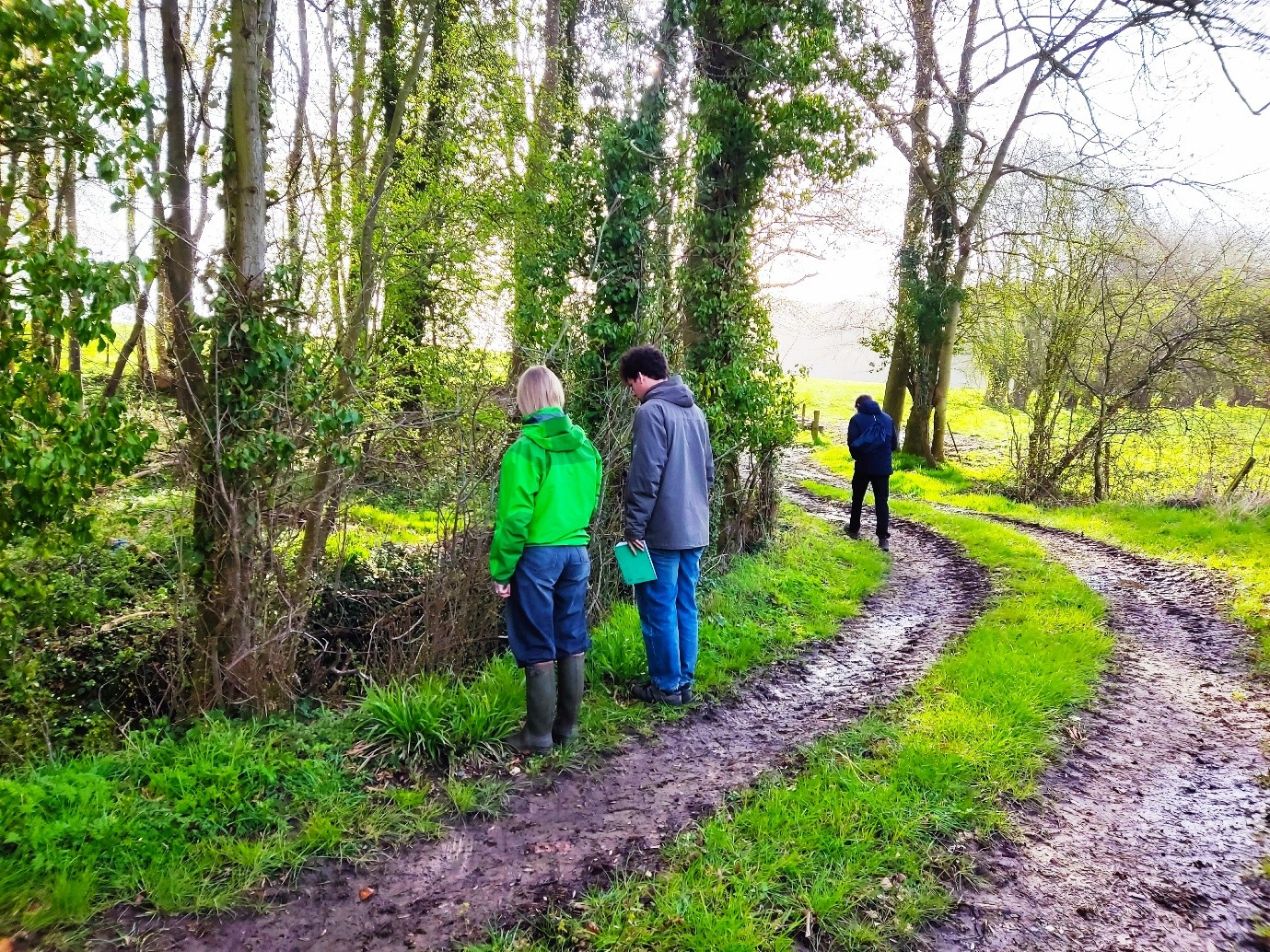
More than 60 MSc‑students of Ghent University in Belgium took part in a field excursion of the course Water Quality Management related to ecological monitoring in the Zwalm river basin on 30 March 2026. As part of this hands‑on training, they used the OneAquaHealth Citizen Science app. They systematically assessed local streams by recording hydromorphological conditions alongside water quality measurements, aquatic macroinvertebrate sampling, and river profile mapping. These complementary methods provided a comprehensive picture of stream health.
Working in small groups, students surveyed multiple sites across the basin. They logged geographic coordinates and created user‑defined sampling locations, ensuring all observations were accurately mapped and time‑stamped. At each site, they evaluated physical and ecological conditions, including channel form, streambed and bank structure, surrounding habitats, and fallen biomass such as organic debris.
Using the app, students also assessed water conditions, including flow, color, and depth. They documented human pressures such as water abstraction, dams, pipes, discharge points, and construction activities. They recorded impervious surfaces along both banks to capture the extent of urban influence.
Riparian zones were carefully examined, with students noting vegetation presence and type, evidence of vegetation cutting, and the occurrence of invasive species.
Each site received an overall environmental assessment, complemented by students’ reflections on their surroundings. Participants rated their feelings of joy, serenity, anger, and fear, highlighting links between environmental quality and human perception. Upstream and downstream photographs were also uploaded to create a visual record.
The excursion provided practical field experience while contributing to a broader citizen science effort. By integrating environmental data, biological sampling, and human perceptions, the OneAquaHealth approach supports a more holistic understanding of freshwater ecosystems and their importance for biodiversity and public health.
Author(s): Marie Anne Eurie Forio, University of Ghent