
Co‑Creating Knowledge for Urban Aquatic Ecosystems: OneAquaHealth Contributions to ECSA 2026
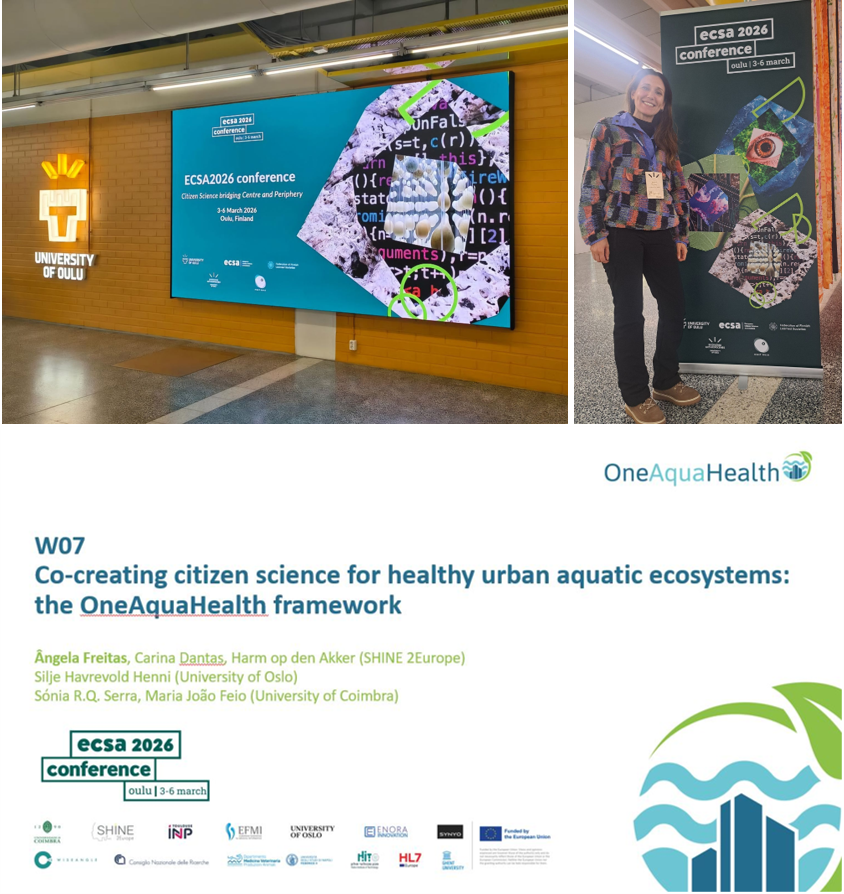
Between 3 and 6 March 2026, the OneAquaHealth consortium – represented by Ângela Freitas, EU Project Manager at SHINE2Europe – participated in the ECSA Conference (European Citizen Science Association). The event gathered around 600 researchers and practitioners from across Europe, forming a vibrant community exploring how citizen engagement can drive environmental sustainability and societal transformation.
During the workshop “Co-created Citizen Science for transformative environmental and sustainable futures”, Mrs Freitas presented the OneAquaHealth approach under the title “Co-creating citizen science for healthy urban aquatic ecosystems: the OneAquaHealth framework”. Her contribution highlighted how citizen science is being implemented across five EU cities – Coimbra, Benevento, Ghent, Oslo and Toulouse – each with its own context, challenges and opportunities.
A key insight she shared is the importance of balancing a common protocol for methodological consistency with the flexibility needed to adapt to local realities, particularly regarding recruitment, training, data collection and knowledge transfer. Central to this process are the Local Alliances, which bring together citizens, researchers, NGOs and local authorities to sustain engagement and strengthen the link between community action and policy.
The workshop discussions also reflected a broader shift in the field: moving from traditional contributory models toward co-creation, where citizens are involved from the earliest stages of research, including the co-design of tools. In OneAquaHealth, citizens took part in workshops and river walks to test and provide feedback on the Citizen Science App, directly contributing to improvements in usability and functionality.
Mrs Freitas also emphasised the role of the App in enabling citizens to submit environmental observations during walks along urban streams, generating valuable data to support the monitoring of freshwater ecosystems. The session further opened important reflections on the long-term sustainability of citizen science platforms and how their outcomes can meaningfully inform policy and urban environmental management.
Author(s): Ângela Freitas, SHINE2Europe