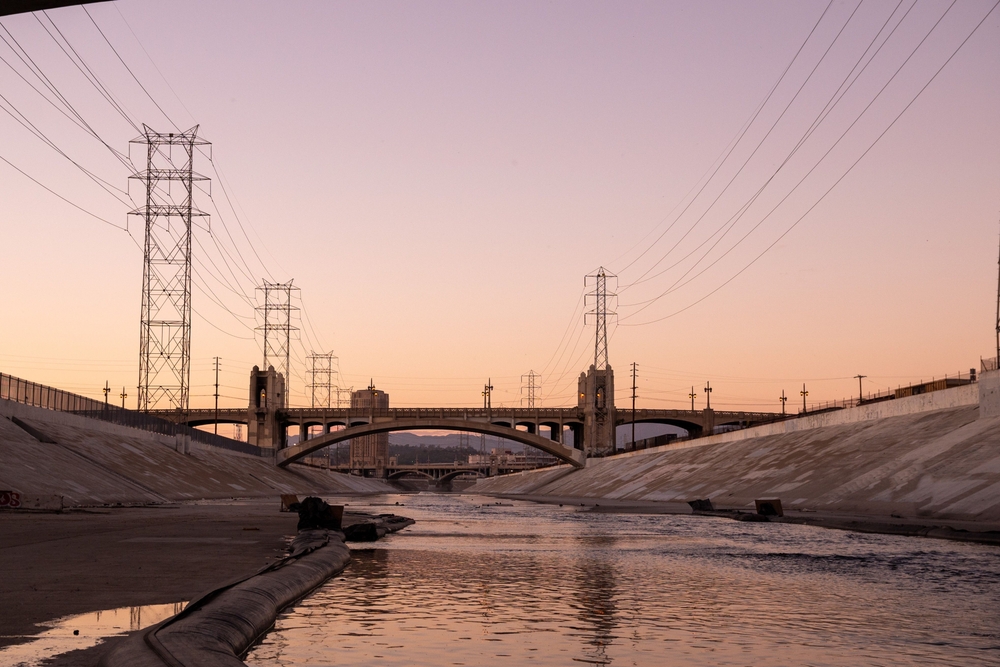
Artificial Rivers in the Western World: Engineered Water, Engineered Risk
Across the western world, rivers have been reshaped into artificial channels – straightened, deepened, lined with concrete, and disconnected from their floodplains. From the Los Angeles River in the United States to countless urban canals across Europe, these engineered systems were designed for one primary purpose: rapid drainage and flood control.
Technically, they work. Hydraulically efficient channels move water downstream faster, protecting infrastructure and enabling urban expansion. But ecologically, they fail. Artificial rivers simplify habitat structure, eliminate riparian vegetation, disrupt sediment transport, and sever the dynamic exchange between surface water and groundwater. The result is biodiversity collapse, degraded water quality, and increased thermal stress – conditions that amplify pathogen emergence and reduce ecosystem resilience.
Under climate change, this model reveals its limits. Faster runoff means higher flood peaks downstream and reduced groundwater recharge during droughts. Cities become both flood-prone and water-scarce.
The new paradigm is not more concrete, but restoration: re-meandering channels, reconnecting floodplains, restoring riparian buffers, and embedding digital environmental surveillance. Artificial rivers solved 20th-century problems. The 21st century demands living rivers – hydrologically functional, ecologically active, and integrated into urban health systems.